Aims

To support the free and open dissemination of research findings and information on alcoholism and alcohol-related problems. To encourage open access to peer-reviewed articles free for all to view.

For full versions of posted research articles readers are encouraged to email requests for "electronic reprints" (text file, PDF files, FAX copies) to the corresponding or lead author, who is highlighted in the posting.

___________________________________________

Monday, April 30, 2007

A Struggle Inside AA
Recovering alcoholics say a Washington, D.C., group has hijacked the 12-step program's name.

By Nick Summers
Newsweek

May 7, 2007 issue - By the time May Clancy turned 15 years old, she was well on her way to drinking herself to death. A middle-school student from Potomac, Md., she had been through 11 different psychiatric and alcohol-rehab programs in two years. Each time, she started drinking again as soon as she got out. Her parents were terrified. "We'd taken her to hospitals—everything possible to get her the best care that we could," says May's father, Mike. "And all these places told us that they didn't think she could make it without Alcoholics Anonymous."

So in November 2005, when May agreed to begin attending meetings at Midtown, one of the oldest and largest AA groups in the Washington, D.C., area, it felt like a miracle. Other AA meetings in the city attracted mostly older men and women; Midtown was known as a place for recovering alcoholics in their teens and 20s. Some of the group's senior members were older, but there were also dozens of high-school and college kids with stories a lot like hers. From the moment she arrived, they seemed to go out of their way to welcome her. At first, May was thrilled to find a group of people who accepted her as she was. "When I went there," she says, "I didn't really talk to anybody, didn't trust anybody. And these people would hang out with me even if I didn't say anything, and include me in conversations. I was desperate to be liked at that point."

But something about Midtown was not right. After a few months, the group's embrace of May began to feel like a chokehold. She says the sponsor assigned to give her moral support and help keep her sober pressured her to cut off ties to anyone outside the group. Another member snatched her cell phone and deleted names in the directory. She says she was pressured to stop taking the medication a doctor had prescribed to manage her bipolar disorder: group members told her she couldn't be sober if she was taking any kind of drug. There was a hierarchy to the group. Younger members were sometimes expected to wash cars, clean houses and do other menial chores for more senior members.

. . . . READ FULL ARTICLE
__________________________________________________________________


Contributor: Don Phillips
Press Release:

New Study Shows Beer Industry Contributes
Billions Annually to U.S. Economy
Report Tallies Jobs, Wages, and Overall Economic Impact


For Immediate Release Contact: Marc Destito, Beer Institute: 202-777-3528

April 23, 2007 Rebecca Spicer, NBWA: 703-683-4300


WASHINGTON, D.C.America’s beer industry, made up of brewers, beer importers, beer distributors, brewer suppliers, and retailers, directly and indirectly contributes nearly $190 billion annually to the U.S. economy according to a new economic impact study. The industry’s economic impact includes more than 1.7 million jobs—paying almost $55 billion in wages—as well as more than $36 billion in federal, state, and local taxes. The study of 2006 data was commissioned by the Beer Institute and the National Beer Wholesalers Association (NBWA).


“This study shows that more than ever, America’s brewers play a pivotal role in promoting strong and robust economic growth throughout our country,” said August A. Busch IV, president and chief executive officer, Anheuser-Busch Companies, Inc., and chairman of the Beer Institute. “Brewers in all 50 states have been supporting the economy in their communities for generations, creating jobs for their neighbors, tax revenue for public services, and promoting alcohol awareness responsibility initiatives for retailers, schools, and families.”


. . . . READ FULL PRESS RELEASE

___________________________________________________________________

Alcohol: No ordinary commodity


An international team of experts are behind the WHO sponsored book. It sums up the research and knowledge on alcohol problems and alcohol policy. Alcohol: No ordinary Commodity builds on the previous volume by Griffith Edwards et. al: Alcohol policy and the public good (1994). The text of the present volume evolved through the development of background papers, many stages of drafting, discussion at plenary meetings and the contributions of a small editorial group. This participatory exercise has resulted in a text that represents the consensus view of the 15 authors.

pages 1343–1350
pages 1351–1352
pages 1352–1353
Trends also in thinking and presentation. Comment on Chapter 3: Alcohol Consumption Trends and Patterns of Drinking
PIA MÄKELÄ
pages 1353–1354
pages 1354–1356
pages 1356–1357

pages 1357–1358

pages 1358–1359

pages 1359–1360

pages 1360–1362

pages 1362–1363

pages 1363–1364

pages 1364–1365

pages 1365–1366

pages 1366–1367

pages 1367–1370

SOURCE: Øystein Bakke www.worldalcohol.net

_________________________________________________________
NEWSLETTER
Volume 6, Issue 1, Spring 2007

FRED MURPHY JONES AND HOMER LINDSEY BRUCE ENDOWED GRADUATE FELLOWSHIPS

The Waggoner Center for Alcohol and Addiction Research administers two endowments to support graduate students in the field of alcohol and addiction research. The Fred Murphy Jones and Homer Lindsey Bruce Endowed Graduate Fellowships provide three-year stipends to some students and salary supplements and travel funds to others.

AWARDEES

Michelle Dupre - Neuroscience
Allison Fedducia - Neuropharmacology
Matthew Sullivan - Cellular & Molecular Biology
Yan Wang - Cellular & Molecular Biology
Reagan Wetherill - Psychology

READ FULL NEWSLETTER
___________________________________________________________________

World Health Assembly set to discuss alcohol

The Health ministers from all over the world will discuss the health burden of alcohol in the forthcoming World Health Assembly to be held in Geneva 14-23 May. This is the follow up of the WHA resolution 58.26 Public health problems caused by harmful use of alcohol, from 2005, the first WHA resolution exclusively on alcohol since 1983. The documents for the alcohol issue are now available on the WHO site.
. . . . .READ MORE

More information:

WHA resolution 58.26 Public health problems caused by harmful use of alcohol (pdf from WHO site)
WHA documents:
A60/14 (pdf rfrm the WHO site)
Evidence-based strategies and interventions to reduce alcohol-related harm
A60/14 Add.1 (pdf from the WHO site)
Evidence-based strategies and interventions to reduce alcohol-related harm; Global assessment of public-health problems caused by harmful use of alcohol
EB121/10 (pdf from the WHO site)
Expert committees and study groups.
This document contains the WHO Expert Committee On Problems Related To Alcohol Consumption, Second report, Geneva, 10–13 October 2006. Part of the document
_______________________________________________

Sunday, April 29, 2007

Press Release: Drugs Of Abuse Used During Pregnancy Inhibit Ability Of Human Placenta Cells To Uptake Folate

April 29, 2007

A study using human placental cells may help explain how drugs of abuse used during pregnancy - including alcohol, nicotine, ecstasy, amphetamine and hashish - can produce toxic effects on the developing fetus.


In a paper presented on April 29 at Experimental Biology 2007, in Washington, DC, researchers from the Department of Biochemistry of the Medical Faculty in Porto University and the Department of Gynecology and Obstetrics in S. Joao Hospital in Porto, Portugal, reported that these substances, sometimes at doses below “recreational” blood level, inhibited uptake of folates by cells taken from human placenta. The presentation is part of the scientific program of The American Physiological Society.


READ FULL PRESS RELEASE

________________________________________________________

Press Release: New Animal Study May Explain Why Alcohol Consumption Increases Breast Cancer Risk

April 29, 2007

WASHINGTON – For the first time, scientists have used a laboratory mouse model to mimic the development of human alcohol-induced breast cancer. The results are part of a new study, Chronic Alcohol Consumption Increases Tumor Growth and Amgiogenesis of Breast Cancer in Female Mice, conducted by Brandi Busby, Wei Tan, Jordan Covington, Emily Young, and Jian-Wei Gu, all of the University of Mississippi Medical Center, Department of Physiology and Biophysics, University of Mississippi Medical Center, Jackson, MS.

. . . . .

This study presents the first animal model to confirm that alcohol consumption stimulates tumor growth and malignancy of breast cancer, and reveals some of the mechanisms of alcohol-induced breast cancer. The findings demonstrate that even moderate alcohol consumption significantly stimulates tumor growth of breast cancer and that induction of tumor angiogenesis and VEGF expressions are mechanisms which are associated with the progression of this deadly disease.

READ FULL PRESS RELEASE
_________________________________________________________________

Senate Bill 992 (Wiggins)

Substance abuse: adult recovery
maintenance facilities.


SUMMARY

Requires the Department of Alcohol and Drug Programs (DADP)
to license Adult Recovery Maintenance Facilities (ARMFs)
and applies existing alcohol and drug abuse recovery or
treatment facilities licensure requirements to ARMFs.
Establishes a variety of administrative procedures related
to certification by DADP.

READ FULL LEGISLATIVE ANALYSIS

Introduced Bill 02/23/07 (PDF)

Amended Bill 04/11/07 (PDF)
___________________________________________________________________
Assembly Bill 346 (Beall)


CURRENT BILL STATUS April 27, 2007


MEASURE : A.B. No. 346
AUTHOR(S) : Beall and Saldana.
TOPIC : Alcoholic beverages: labels.
HOUSE LOCATION : ASM
+LAST AMENDED DATE : 04/18/2007


TYPE OF BILL :
Active
Non-Urgency
Non-Appropriations
Majority Vote Required
State-Mandated Local Program
Fiscal
Non-Tax Levy

LAST HIST. ACT. DATE: 04/26/2007
LAST HIST. ACTION : Joint Rule 62(a), file notice waived.
COMM. LOCATION : ASM GOVERNMENTAL ORGANIZATION
COMM. ACTION DATE : 04/25/2007
COMM. ACTION : Hearing postponed by committee.

TITLE : An act to add Section 25205 to the Business and
Professions Code, relating to alcoholic beverages.
__________________________________________________________________________

Bill Analysis
Purpose of the bill  .  According to the author. many alcoholic
beverages currently available in California are packaged and
labeled in a manner that is similar to packaging and labels used
for nonalcoholic beverages and products like energy drinks,
colas, sodas, fruit drinks and gelatins.

This packaging and labeling practice has the potential for
confusing underage youth, parents, teachers, law enforcement
personnel, retail employers that sell alcoholic beverages, and
other
members of the public regarding the alcoholic content of these
beverages.

The author further states, "ensuring that underage youth,
parents, teachers, law enforcement personnel, retail employees
that sell alcoholic beverages, and other members of the public
are able to readily discern the fact that a particular product
contains alcohol and the amount of alcohol the beverage contains
is a high priority for California. California currently
regulates information, including information regarding the
contents of the container, located on containers of alcoholic
beverages sold within the state."

The purpose of this bill is to provide additional consumer
information regarding the alcohol content on the container of
specified alcoholic beverages as a means to reduce potential
consumer confusion and is not intended to provide health
information or a warning.

In support . Supporters note this bill would require appropriate
disclosure and helpful behavior in the marketing of new
soda-like and energy drinks containing alcohol.

Supporters further state, product labeling and packaging in some
cases make it nearly impossible to determine whether FMBs
contain alcohol and, if they do, their alcohol content.

Supporters believe this bill attempts to address the serious
issues surrounding the targeting of youth, most especially young
women, for the purchase and consumption of "Alcopops" in
California.

Supporters note respected research and studies show elements of
the alcohol industry have begun to market, advertise, package,
distribute, place, and sale troubling alcoholic beverages with
strong appeal to youth.

In opposition . The California Small Brewers Association states,
"the standards which would trigger the excessive labeling
requirements under this bill are too subjective. Small brewers
produce craft beers to be enjoyed by adults. CSBA does not
condone or promote advertising that appeals to drinkers under
the age of twenty-one. Products produced by CSBA members,
however, could potentially be brought into consideration of the
regulatory authority provided by this bill. This is despite the
fact that they are packaged in traditional glass bottles and
containers. Often times, craft brewers include creative and
artistic rendering on their labels that could be subjectively
considered as cartoons, etc. In addition, some of our members
market soft drinks in dark colored glass that resemble beer
bottles. Would this trigger attention by the regulation?"

Anheuser-Busch Companies, Inc. writes "Alcohol beverage
manufacturers would be required to place a "new" label on these
products stating they contain alcohol. This requirement is
duplicative of federal and state laws. Today, labels on alcohol
beverages sold in California must state the percentage of
alcohol by volume; and have a Prop. 65 Warning that spells out
the following information: 1) pregnant women should not drink
alcoholic beverages during pregnancy because of the risk of
birth defects, 2) consumption of alcoholic beverages impairs
ones ability to drive a car or operate machinery, and 3) may
cause health problems. Beer products are also required to
provide recycling information. Adding another "California-only"
labeling requirement is costly, and does not address the
fundamental issue of how minors are getting access to alcohol
beverages."

Related legislation .

AB 345 (Saldana) of 2007, provides that, for calendar years
beginning on or after January 1, 2008, the State Board of
Equalization (BOE) shall calculate the total amount of all
surtaxes, interest, and penalties that would be collected as a
result of a reclassification of any alcoholic beverage from beer
to a distilled spirit, specified. (Assembly G.O. Committee)


REGISTERED SUPPORT / OPPOSITION :

Support

Alameda County Board of Supervisors
American Medical Association
California Catholic Conference
California Council on Alcohol Problems
California State PTA
Council of Churches Santa Clara County
County Alcohol and Drug Program Administrators Association of
California (CADPAAC)
Girl Scout Councils of California
Los Angeles County Office of Education
Lutheran Office of Public Policy
Santa Clara County Board of Supervisors
Stanislaus County Children's Council

Opposition

7-Eleven Stores Inc.
Allied Beverages, Inc.
American GI Forum of California
Anheuser-Busch Companies, Inc.
Asian Business Coalition
Black Business Association
California Beer and Beverage Distributors (CBBD)
California Beverage Merchants
California Black Chamber of Commerce
California Grocers Association
California Retailers Association
California Service Station and Automotive Repair Association
Coors Brewing Company.
Diageo North America, Inc.
Distilled Spirits Council of the United States
Family Winemakers of California
Miller Brewing Company
Neighborhood Market Association
Numerous letters from employees of Harbor Distributing
Numerous letters from employees of Mesa Distributing Company
The California Small Brewers Association
The Regional Hispanic Chamber of Commerce
Wine Institute

Read Full Bill Analysis
____________________________________________________________________________________

Saturday, April 28, 2007


 Assembly Bill 1657 (Runner)

CURRENT BILL STATUS April 27, 2007


MEASURE : A.B. No. 1657
AUTHOR(S) : Sharon Runner and Torrico.
TOPIC : Alcoholic beverages: underage drinking.
HOUSE LOCATION : ASM

TYPE OF BILL :
Active
Non-Urgency
Non-Appropriations
Majority Vote Required
State-Mandated Local Program
Fiscal
Non-Tax Levy

LAST HIST. ACT. DATE: 04/18/2007
LAST HIST. ACTION : From committee: Do pass, and re-refer to Com. on APPR.
Re-referred. (Ayes 6. Noes 0.) (April 17).
COMM. LOCATION : ASM APPROPRIATIONS

TITLE : An act to amend Section 25658 of the Business and
Professions Code, relating to alcoholic beverages.

______________________________________________________________________________

Bill Analysis
 Date of Hearing:   April 17, 2007
Counsel: Kimberly A. Horiuchi


ASSEMBLY COMMITTEE ON PUBLIC SAFETY
Jose Solorio, Chair

AB 1657 (Runner) - As Introduced: February 23, 2007


SUMMARY : Creates an alternate misdemeanor-felony, as
specified, for any person to furnish alcohol to a minor who
thereafter causes death or great bodily injury (GBI), as
specified. Specifically, this bill :

1)States any person who purchases, furnishes or gives any
alcoholic beverage to a person the provider knew or reasonably
should have known was under 21, where thereby the person under
21 proximately causes death or great bodily injury to him or
herself or others and the provider knew or reasonably should
have known of the danger, shall be punished by up to one year
in county jail or a term of 16, 2 or 3 years in state prison.

2)States retail employees shall not be subject to a felony
prosecution, as specified, for the sale of alcoholic beverages
to a person under the age of 21 unless the retail employee
knew the person was under the age of 21.

. . . . .

COMMENTS :

1)Author's Statement : According to the author, "In 2005, I
introduced 'Jeffrey's Law' in the memory of a 17-year-old boy
taken from his mother. A 41-year-old woman provided Jeffrey
and his underage friends with alcohol, allowing 11 of them to
drive away in an SUV. This action took the lives of two
children and seriously injured the others.

"Unfortunately, my legislation failed, and adults in California
continued providing alcohol to minors. Last year in my
district, California Highway Patrol (CHP) officer Gregory John
Bailey - a husband and father of four children - was struck
and killed by an intoxicated underage driver while performing
a traffic stop. The minor had dropped off the adult friend,
who provided him with his alcohol, moments before the crash.

"Whose life will be taken this year? This problem is not unique
to my district. The following statistics, provided by the
Office of the Attorney General, demonstrate its prevalence
throughout California: on 2000, 2,177 youths who had been
drinking were involved in fatal and injury collisions in
California (CHP Fact Sheet 2000); in 1999, there were 1,741
driving-under-the-influence (DUI) arrests of youths under 18
and 13,875 DUIs of underage drivers age 18 to 20 in California
(Annual Report of California DUI Management Information
System, 2001). More than 33% of vehicle-related teen deaths
involve alcohol (California Office of Traffic Safety).

2)Defining the Elements of Business and Professions Code Section
25658(c)
: Alcohol regulation has long devolved to the power
of the states under the Twenty-First Amendment. Business and
Professions Code Section 25658(c) does not explicitly require
that the offender have knowledge, intent, or some other mental
state when purchasing or furnishing the alcoholic beverage.
[ In re Michael Lee Jennings (2004) 34 Cal. 4th 254, 262.] In
re Michael Lee Jennings
deals squarely with the issue imagined
by the author. In that case, the defendant had a party where
underaged attendants consumed alcohol and then got into an
accident resulting in GBI. The court stated, "The generalized
action of the typical social party host, providing libations
for his or her guests, do not run afoul of the more specific
Business and Professions Section 25658(c), because as a
general matter, such hosts cannot be said to have purchased
alcoholic beverages for any particular guest. To violate
Business and Professions Section 25658, one must not only
furnish alcohol to an underage person, one must purchase the
alcohol for that person (emphasis added). In light of the
plain meaning of the statutory language, we conclude that
Business and Professions Section 25658 applies to any
situation in which an individual purchases alcoholic beverages
for an underage person." ( Id ., at 266.) The most common
manifestation of this scenario is 'shoulder tapping', meaning
an underage person approaching an adult to buy liquor for
them."

3)Arguments in Support : According to the Office of the Mayor,
City of West Covina
, "AB 1657 provides that any person who
purchases any alcoholic beverage for, or furnishing, giving,
or giving away any alcoholic beverage to, a person who the
provider knew or reasonably should have known to be under the
age of 21 years, and the person under the age of 21 years
thereafter consumes the alcohol and thereby proximately causes
great bodily injury or death or himself, herself, or any other
person, and the provider knew or reasonably should have know
of the danger, is guilty of a misdemeanor or a felony."

4)Arguments in Opposition : None submitted.

5)Prior Legislation :

a) AB 454 (Runner), of the 2005-06 Legislative Session, was
identical to this bill and failed passage in the Senate
Committee on Public Safety.

b) AB 2967 (Runner), of the 2005-06 Legislative Session,
was identical to this bill and failed passage in the Senate
Committee on Public Safety.

REGISTERED SUPPORT / OPPOSITION :

Support

City of Adelanto
Crime Victims United
Office of the Mayor, City of West Covina
57 private citizens

Opposition

Drug Policy Alliance Network

READ FULL BILL ANALYSIS
_______________________________________________________________________________
Press Release: Runner Package To Combat Underage Drinking Passes Committees
Bills receive unanimous support
4/19/2007
For Immediate Release
CONTACT: Sharon Runner
Colleen Ripchick
(916) 319-2036


Sacramento – This week, two Assembly policy committees voted to support the bills in Assemblywoman Sharon Runner’s (R-Lancaster) underage drinking package. On Tuesday, the Assembly Committee on Public Safety unanimously passed
AB 1657, and on Wednesday the Assembly Committee on Governmental Organization unanimously passed AB 1658.

“I am encouraged that these issues have such broad support among members of both parties of the Legislature,” said Assemblywoman Runner. “We cannot let these issues of public safety go unaddressed any longer; I look forward to seeing this package realized.”

AB 1657, commonly known as “Jeffrey’s Law” was first introduced in 2005 in memory of a 17 year-old boy taken from his mother. A 41 year-old woman provided Jeffrey and his underage friends with alcohol, allowing 11 of them to drive away in an SUV. This action took the lives of two children and seriously injured the others. The woman was sentenced to a mere 180 days in county jail.

“Jeffrey’s Law” seeks to deter adults who knowingly provide alcohol to minors by allowing for a felony for the most egregious instances of death and injury.

According to a study by the Pacific Institute for Research and Evaluation, the cost of underage drinking is nearly $600 per American household each year, yet many of the current fines for underage drinking are under $500.

AB 1658 standardizes state law to more accurately reflect the dangers of underage drinking and its costs to society. This bill would fine minors, guilty of underage drinking, up to $500 for the first offense and $1000 for the second offense. Additionally, the bill fines adults $2500 for providing alcohol or false identification to minors.

“These measures could save lives,” said Assemblywoman Runner. “As members of government we should be pursuing all means within our power to protect the safety of the public, especially the safety of our children and this package would go a long way in doing just that.”

AB 1657 has been referred to the Assembly Committee on Appropriations and AB 1658 has been referred to the Assembly Committee on Public Safety.
###
_________________________________________________________________________________________________


Assembly Bill 1658 (Runner)


CURRENT BILL STATUS April 27, 2007


MEASURE : A.B. No. 1658
AUTHOR(S) : Sharon Runner.
TOPIC : Alcoholic beverages: underage drinking.
HOUSE LOCATION : ASM
+LAST AMENDED DATE : 04/10/2007


TYPE OF BILL :
Active
Non-Urgency
Non-Appropriations
Majority Vote Required
State-Mandated Local Program
Fiscal
Non-Tax Levy

LAST HIST. ACT. DATE: 04/26/2007
LAST HIST. ACTION : Read second time and amended.
COMM. LOCATION : ASM PUBLIC SAFETY
COMM. ACTION DATE : 04/24/2007
COMM. ACTION : Do pass as amended, and re-refer to Committee on
Appropriations with recommendation: To Consent Calendar.
COMM. VOTE SUMMARY : Ayes: 07 Noes: 00 PASS

TITLE : An act to amend Sections 25658, 25658.5, 25660.5, 25661,
and 25662 of the Business and Professions Code, and to
amend Sections 13004.1 and 14610.1 of the Vehicle Code,
relating to alcoholic beverages.

______________________________________________________________
Bill Analysis
 Date of Hearing:   April 24, 2007
Counsel: Kimberly A. Horiuchi


ASSEMBLY COMMITTEE ON PUBLIC SAFETY
Jose Solorio, Chair

AB 1658 (Runner) - As Amended: April 10, 2007
As Proposed to be Amended in Committee

SUMMARY : Increases various fines in existing law for persons
convicted of furnishing, selling or giving an alcoholic beverage
to a person under the age of 21. Specifically, this bill :

1)Increases the fine levied against any person under the age of
21 who sells, furnishes or gives away an alcoholic beverage to
a person under 21 years of age from $250 to $500 and from $500
to $1,000 for a second or subsequent offense.

2)Increases the penalty for any person under the age of 21 who
furnishes or causes the alcoholic beverage to be furnished
from a fine and community service to up to one year in the
county jail and increases the fine from $1,000 to $2,500.

3)States the imposition of penalties shall not be precluded
under any other provision of law.

4)Elevates the fine for any person under the age of 21 who
attempts to purchase any alcoholic beverage from $100 to $500
and from $250 to $1,000 for a second or subsequent offense.

5)States any person, who gives, sells or furnishes a false or
fraudulent written, printed or photostatic evidence of age of
majority to a person under 21 years of age shall be fined
$2,500 which may not be suspended and the person shall be
required to perform not less than 24 hours of community
service during hours when the person is not employed and is
not attending school.

6)States any person who furnishes alcohol to a minor whereby the
minor proximately causes death or great bodily injury shall be
fined $2,500, no part of which shall be suspended.

7)Increases the fine for every person under the age of 21 who
presents a false or fraudulent written, printed or photostatic
evidence of age of majority for the purposes of procuring
alcohol from $250 to $500 and from $500 to $1,000 for a second
or subsequent offense.

8)Increases the fine for every person under the age of 21 who
has any alcoholic beverage in his or her possession on any
street or highway or in any alcoholic beverage in his or her
possession from $250 to $500 and $500 to $1,000 for any second
or subsequent offense.

9)States any person who manufactures or sells an identification
document of a size and form substantially similar to the
identification cards issued by the Department of Motor
Vehicles (DMV) shall be punished by a fine of $2,500, no part
of which shall be suspended and the person shall be required
to perform not les than 24 hours of community service during
the hours when the person is not employed and is not attended
school.

EXISTING LAW :

1)States that every person who sells, furnishes, gives, or
causes to be sold, furnished, or given away, any alcoholic
beverage to any person under the age of 21 years is guilty of
a misdemeanor. [Business and Professions Code Section
25658(a).]

2)States that any person who violates existing law by purchasing
any alcoholic beverage for, or furnishing, giving, or giving
away any alcoholic beverage to, a person under the age of 21
years, and the person under the age of 21 years thereafter
consumes the alcohol and thereby proximately causes great
bodily injury or death to himself, herself, or any other
person is guilty of a misdemeanor. [Business and Professions
Code Section 25658(c).]

3)Provides that any on-sale licensee who knowingly permits a
person under the age of 21 years to consume any alcoholic
beverage in the on-sale premises, whether or not the licensee
has knowledge that the person is under the age of 21 years, is
guilty of a misdemeanor. [Business and Professions Code
Section 25658(d).]

4)Provides that except as provided by law, any person who
violates existing law by furnishing an alcoholic beverage, or
causing an alcoholic beverage to be furnished, to a minor
shall be punished by a fine of $1,000, no part of which shall
be suspended, and the person shall be required to perform not
less than 24 hours of community service during hours when the
person is not employed and is not attending school. [Business
and Professions Code Section 25658(e)(2).]

. . . . .

REGISTERED SUPPORT / OPPOSITION :

Support

Diageo North America
Mothers Against Drunk Driving
The Century Council

Opposition

None


READ FULL BILL ANALYSIS
_________________________________________________________________________________
Press Release: Help comes in the mail for drinkers

Public release date: 27-Apr-2007

Mailing a simple information pamphlet to interested drinkers in the general population reduced binge drinking by 10 per cent, and is a promising public health approach to reduce the health and social problems associated with heavy drinking, shows a new study led by the University of Alberta.

Brief interventions to help people change their alcohol use have long been recognized as a potentially useful strategy, but past research in this area has focused on college students, problem drinkers screened in clinics and hospitals or people seeking specialized counselling and alcohol rehabilitation treatment.

“While these are important target groups, university students only represent a small fraction of drinkers in the general population who engage in heavy alcohol consumption and get into problems,” said Dr. Cameron Wild, lead author of the paper and a professor in the School of Public Health at the University of Alberta in Edmonton, Canada. “As for screening for alcohol problems in health care, busy health care professionals often don’t enquire about alcohol problems. Our study was designed to fill this gap. We showed that simply mailing brief self-help materials to interested adults in the general public can be an effective way to expand the reach and impact of brief alcohol interventions.”

. . . . . Read Full Press Release

___________________________________________________________

Friday, April 27, 2007

Fruity cocktails count as health food, study finds


WASHINGTON (Reuters) - A fruity cocktail may not only be fun to drink but may count as health food, U.S. and Thai researchers said on Thursday.

Adding ethanol -- the type of alcohol found in rum, vodka, tequila and other spirits -- boosted the antioxidant nutrients in strawberries and blackberries, the researchers found.

Any colored fruit might be made even more healthful with the addition of a splash of alcohol, they report in the Journal of the Science of Food and Agriculture.

. . . . . READ FULL ARTICLE

___________________________________________________________________

Natural volatile treatments increase free-radical scavenging capacity of strawberries and blackberries
Journal of the Science of Food and Agriculture
Early View Published Online: 19 Apr 2007


Free-radical scavenging capacities of strawberries and blackberries treated with methyl jasmonate (MJ), allyl isothiocyanate (AITC), essential oil of Melaleuca alternifolia (tea-tree oil or TTO), and ethanol (EtOH) were investigated.

These results indicated that all of the natural volatile compounds tested in this study, except AITC, promoted the antioxidant capacity and scavenging capacity of most major free radicals and, thus, helped to improve the physiology of berry fruits and enhanced their resistance to decay.

While AITC was also very effective in reducing decay, its effect on free-radical scavenging capacity was inconsistent, suggesting that additional mechanisms may be involved in its inhibition of fungal growth.


READ FULL ABSTRACT


REPRINT REQUEST E-MAIL: wangc@ba.ars.usda.gov
___________________________________________________________________
Thinking Drinking II wrap up

Three hundred delegates attended Thinking Drinking II: From Problems to Solutions which took place in Melbourne, Australia from the 26 - 28 February 2007.

Thinking Drinking II sought to identify and advance solutions rather than continue to describe the problems.

A major theme throughout the conference was the need for public health advocates to establish a limited set of demands, argue for them consistently and support their demands with a rational case based on sound evidence. Advocates need to show strong community support for the policies they espouse, because politicians respond only to causes supported by voters.

. . . . . Read more about the conference

Presentations from Thinking Drinking II, where available, are listed in alphabetical order by surname.

WHAT SHALL WE DO WITH A DRUNKEN SAILOR (SOLDIER OR AIRMAN)? ACHIEVING CULTURAL CHANGE WITHOUT THE LASH (PPT) [PDF, 171 KB]
WHAT SHALL WE DO WITH A DRUNKEN SAILOR? (MEDIA FILE) [MP3, 1.5 MB]
Air Vice-Marshal Tony Austin, Head Defence Health Services, Australian Defence Force

MAKING SENSE OF INTOXICATION [PDF, 35 KB]
Robert Barby, Community Safety Consultant

GETTING POLICY OVER THE LINE: ENCOURAGING WHOLE-OF-LOCAL-GOVERNMENT ACTION ON ALCOHOL HARMS [PDF, 33 KB]
Mark Boyd, Senior Project Officer, Health Inequalities, VicHealth

IF YOU BUILD IT THEY WILL COME: DELIVERING A WORKPLACE AOD PROGRAM [PDF, 30 KB]
Donna Bull, Chief Executive Officer, Alcohol and Other Drugs Council of Australia

ALCOHOL TAXATION AND THE LOW STRENGTH ALCOHOLIC BEVERAGE MARKET: UPDATING THE CASE FOR REFORM [PDF, 36 KB]
Donna Bull, Chief Executive Officer, Alcohol and Other Drugs Council of Australia

IMPACT OF SCHOOL ETHOS AND RELATIONSHIPS IN SCHOOLS [PDF, 219 KB]
Helen Butler, Manager, Professional Learning, Adolescent Health and Social Environments Program, Centre for Adolescent Health

TAKING THE ALCOHOL INDUSTRY TO COURT. IS IT WORTH IT? [PDF, 94 KB]
Bruce Clark, Director, Leigh Clark Foundation

LEARNING FROM THE LONG TERM TOBACCO CAMPAIGN [PDF, 70 KB]
Professor Mike Daube, John Curtin Institute of Public Policy, Curtin University of Technology

POTENTIAL FOR LITIGATION AGAINST ALCOHOL MANUFACTURERS [PDF, 55 KB]
Peter Gordon, Senior Partner, Slater and Gordon

DIRECTIONS FOR LAW ENFORCEMENT [PDF, 86 KB]
Inspector John Green, Manager, Alcohol Crime Project, State Crime Command, NSW Police

PSEUDO UNDERAGE LIQUOR SALES [PDF, 443 KB]
Sarah Jaggard, Manager, Alcohol Projects, Injury Control Council of Western Australia

LIQUOR LICENSING ACTION AS A CULTURAL CHANGE STRATEGY [PDF, 1.58 MB]
Gary Kirby, Director, Prevention and Practice Development, Drug and Alcohol Office and Naomi Henrickson, Manager, Alcohol Program, Drug and Alcohol Office

ENOUGH IS ENOUGH: CHALLENGING AND CHANGING WESTERN AUSTRALIA'S DRINKING CULTURE [PDF, 1.45 MB]
Gary Kirby, Director, Prevention and Practice Development, Drug and Alcohol Office and Naomi Henrickson, Manager, Alcohol Program, Drug and Alcohol Office

CULTURE AND ALCOHOL: THE WHAT, WHERE, WHEN, HOW AND HOW MUCH (PPT) [PDF, 158 KB]
CULTURE AND ALCOHOL: THE WHAT, WHERE, WHEN, HOW AND HOW MUCH (WORD) [PDF, 101 KB]
Sandra Kirby, Deputy Chief Executive Officer, Alcohol Advisory Council of New Zealand

IT’S HOW WE’RE DRINKING: HOW’S IT GOING? [PDF, 76 KB]
Sandra Kirby, Deputy Chief Executive Officer, Alcohol Advisory Council of New Zealand

ALCOHOL USE AND HARM AMONG YOUNG PEOPLE: THE DATA ON LOCAL GOVERNMENT AREAS [PDF, 95 KB]
Dr Anne-Marie Laslett, Research Fellow, Epidemiology and Surveillance Program, Turning Point Alcohol and Drug Centre

MANAGING ALCOHOL USE IN MELBOURNE’S LATE NIGHT ENTERTAINMENT PRECINCTS [PDF, 1.22 MB]
Colleen Lazenby, Manager, Safety and Wellbeing, City of Melbourne

ALCOHOL OUTLET DENSITY AND HARM: REVIEWING THE EVIDENCE [PDF, 60 KB]
Michael Livingston, Research Fellow, AER Centre for Alcohol Policy Research, Turning Point Alcohol and Drug Centre

PRACTICE AND CHANGE: WHAT LICENSED VENUES CAN DO TO ADDRESS ALCOHOL-RELATED ISSUES [PDF, 51 KB]
Dr Jane Mallick, Director, Centre for Youth Drug Studies, Australian Drug Foundation and Kimberley Banfield, Research Officer, Centre for Youth Drug Studies, Australian Drug Foundation

PROMOTING ALCOHOL TO YOUNG PEOPLE IN AOTEAROA: MARKETING INTOXICATION? [PDF, 232 KB]
Dr Tim McCreanor, Senior Researcher, Whariki Research Group, Massey University

IMPACT OF FORMAL ALCOHOL EDUCATION [PDF, 46 KB]
Associate Professor Richard Midford, Project Leader, National Drug Research Institute

MIND MAPPING [PDF, 808 KB]
Minds at Work

SUPERMARKETS, LOSS LEADING AND THE RELATIVE PRICE OF ALCOHOL [PDF, 107 KB]
Wendy Moore, Manager, Policy, Alcohol Advisory Council of New Zealand

COST-EFFECTIVENESS OF DRY AREA INTERVENTION TO REDUCE ALCOHOL CONSUMPTION IN INDIGENOUS AUSTRALIAN COMMUNITIES [PDF, 124 KB]
Michael Otim, Research Fellow, Health and Social Development, Deakin University

TAXING BEVERAGES THAT DRIVE IRRESPONSIBLY? [PDF, 51 KB]
Dennis Petrie, PhD Student, School of Population Health, University of Queensland

THE POTENTIAL OF THE WORKPLACE FOR ACHIEVING CULTURAL CHANGE: A CASE STUDY OF THE AUSTRALIAN CONSTRUCTION INDUSTRY [PDF, 1.32 MB]
Dr Ken Pidd, Deputy Director, National Centre for Education and Training on Addiction

DEVELOPING ADVOCACY AT A LOCAL LEVEL: HOW SERVICES CAN BE ADVOCATES [PDF, 34 KB]
Larry Pierce, Executive Director, Network of Alcohol and Other Drugs Agencies and Vanessa Long, Manager, Network of Alcohol and Other Drugs Agencies

TRANSLATING GOOD SPORTS INTO A NATIONAL PROGRAM [PDF, 360 KB]
John Rogerson, Director, Good Sports, Australian Drug Foundation

WHO WANTS TO GET DRUNK? INTOXICATION AS A PLEASURE AND A PURPOSE [PDF, 151 KB]
Professor Robin Room, Director, AER Centre for Alcohol Policy Research, Turning Point Alcohol and Drug Centre

DOES AGE MATTER? HOW AND WHEN TO INTRODUCE CHILDREN TO ALCOHOL? [PDF, 28 KB]
Associate Professor John Toumbourou, Senior Lecturer, Centre for Adolescent Health

AUSTRALIA’S NATIONAL ALCOHOL STRATEGY: REFLECTIONS ON THE POLICY DEVELOPMENT PROCESS [PDF, 127 KB]
Brian Vandenberg, Senior Policy Analyst, Premier’s Drug Prevention Council, Department of Human Services

IMPROVING LIQUOR LICENSING PRACTISE [PDF, 333 KB]
Gino Vumbaca, Executive Officer, Australian National Council on Drugs

A MULTI-STAKEHOLDER STRATEGY FOR DEALING WITH LOCAL PROBLEMS [PDF, 35 KB]
Ros Winkler, Drugs and Safety Planner, City of Boroondara

_________________________________________________________________

Press Release: Among women, light drinkers have fewer heart attacks than abstainers

27 April 2007

New research reveals that women who drink in moderation have a lower chance of heart attack than those who never drink alcohol. But the picture is starkly different for women who get drunk at least once a month, thereby substantially raising their risk of heart attack. The study, published in this month’s issue of Addiction, is of interest because most research on this issue relates to men, but women differ from men in terms of their drinking habits, alcohol metabolism, and overall risk of coronary heart disease. Researchers set out to find how much women drink, how often, and what their patterns of drinking are, and how these factors impact on their susceptibility to heart attack.

. . . . . READ FULL PRESS RELEASE

___________________________________________________________________

Alcohol drinking pattern and non-fatal myocardial infarction in women
Addiction 102 (5), 730–739.


Evidence continues to emerge indicating the pattern of alcohol consumption has important implications for cardiovascular disease (CVD) risk, although the majority of studies have focused on men. The aim of the study is to examine the association between alcohol volume and various drinking patterns and non-fatal myocardial infarction (MI) in women aged 35–69 years.

In this population of light to moderate drinkers, alcohol consumption in general was associated with decreased MI risk in women; however, episodic intoxication was related to a substantial increase in risk.

READ FULL ABSTRACT

REPRINT REQUEST E-MAIL: jdorn@buffalo.edu

____________________________________________________________

The Factor Structure of the Alcohol Use Disorders Identification Test (AUDIT)
Volume 68, 2007 > Issue 3: May 2007

Past research assessing the factor structure of the Alcohol Use Disorders Identification Test (AUDIT) with various exploratory and confirmatory factor analytic techniques has identified one-, two-, and three-factor solutions.

Because different factor analytic procedures may result in dissimilar findings, we examined the factor structure of the AUDIT using the same factor analytic technique on two new large clinical samples and on archival data from six samples studied in previous reports.

Across samples, analyses supported a correlated, two-factor solution representing alcohol consumption and alcohol-related consequences. The three-factor solution fit the data equally well, but two factors (alcohol dependence and harmful alcohol use) were highly correlated. The one-factor solution did not provide a good fit to the data.

These findings support a two-factor solution for the AUDIT (alcohol consumption and alcohol-related consequences). The results contradict the original three-factor design of the AUDIT and the prevalent use of the AUDIT as a one-factor screening instrument with a single cutoff score.

READ FULL ABSTRACT

REPRINT REQUEST E-MAIL: srdoyle@u.washington.edu
___________________________________________________________________

The validity of the laboratory marker combinations DOVER and QUVER to detect physician’s diagnosis of at-risk drinking
Addiction Biology 12 (1), 85–92.

Especially in situations where it might be favorable for the patient to dissimulate the existing alcohol problem, ‘objective’ laboratory tests can be helpful.

In this study we report validation of the two combinations DOVER (DOctor VERified) and QUVER (QUestionnarie VERified) of the biological markers percent carbohydrate-deficient transferrin (%CDT) and gamma-glutamyl-transferase (γ-GT) to detect patients that have been identified by their physicians with at-risk drinking behavior.

Our analysis demonstrated that the combination of the markers γ-GT and %CDT with the physician’s judgement of the condition as reference was superior to the use of single markers.

READ FULL ABSTRACT

REPRINT REQUEST E-MAIL: michael.berner@uniklinik-freiburg.de
____________________________________________________________


Thursday, April 26, 2007


Press Release: Alcohol Industry Watchdog Challenges Diageo: Don't Pass the Buck; Add Criminal Charges for CEOs Who Entice Youth to Drink Alcopops


Contact: Michael Scippa, 415-548-0492 cell; Pete Ratajczak, 415-257-2488; both for the Marin Institute

SAN RAFAEL, Calif., April 24 /Standard Newswire/


-- Diageo, maker of Smirnoff Ice, the top-selling "alcopop," has been publicly goading Marin Institute, the alcohol industry watchdog, to endorse California's AB 1658. The bill, introduced by Assembly member Sharon Runner, would increase penalties for adults who provide alcohol to a minor from community service to imprisonment. The bill also increases penalties for youth caught in possession or attempting to purchase alcoholic beverages. Marin Institute calls on Diageo to demonstrate its avowed commitment to the prevention of underage drinking by asking the bill's author to add criminal penalties for corporations and CEOs that contribute to underage drinking by marketing alcohol products that blur the distinctions between alcoholic and non-alcoholic beverages.


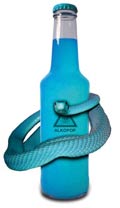
We also call on Diageo to support AB 346, introduced by Lori Saldana and Jim Beall, which will be heard by Assembly Government Operations Committee on Wednesday, April 25, 2007. AB 346 is a legislative response to the flood of new alcohol products that simultaneously confuse consumers and promote underage drinking. Packaged to look like everything from Juice Squeezes to energy drinks to Jello cups, the packaging for these products misleads both adults and youth who often think "alcopops" are either non-alcoholic or significantly lighter in alcohol content than beer. Law enforcement, health professionals, parents, youth leaders, and their adult mentors have been raising a red flag about these sweet, bubbly, often fruit-flavored and caffeine-laced drinks for some time. AB 346 would address this problem by requiring additional labeling, making it clear these products contain alcohol. Consistent with its zero tolerance for underage drinking, Diageo, maker of the top-selling alcopop, Smirnoff Ice, should endorse AB 346.


. . . . . READ FULL PRESS RELEASE

__________________________________________________________________